

Silent Cries Loud Echoes: When Crisis Is Normalised
There is a Shona Proverb, “mwana asingachemi anofira mumbereko,” which loosely translates to “a baby that does not cry dies in the baby carrier”; it’s a metaphor for how no one will know you are in a, crisis if you do not speak out.
In the context of a Zimbabwean artisanal miner, if you don’t listen to the warning cries, you may die in a blasting explosion. The warning system in Zimbabwe’s small-scale mining pits is not a siren. It is not a flashing light or a regulated safety procedure. It is a human voice, someone running and screaming “hora, hora” and whatever you do next is entirely up to you and your situational awareness because what comes next is an explosion.
“With some blasts, people might die even when they are on top of the surface.”
-artisanal miner experience
Zimbabwe is a mineral-rich country, where presumably if you know what you are doing and just scratch at the land, you could find treasure beyond your wildest dreams. But while the gold and mineral riches are romanticised, the hazards and risks are downplayed and the human cost of the multi-million dollar industry translates to a war crime.
Picture a situation where someone sets their explosives (usually illegally sourced, unregulated and with a high risk of accidental detonation) and jumps out of the shaft yelling “hora hora”, without warning or preamble, and if you don’t get away in time, you wind up another statistic. It’s a risk for those on the ground and below ground, and that’s just a regular Wednesday with no other protection but your instinct and familiarity with danger.
While a blasting incident might be the most violently traumatic occurrence, it actually ranks low amongst the things that an artisanal miner is constantly worried about, with the peak being buried alive in the shaft. The shaft is often unreinforced and a hand-operated winch winder serves as the conveyance for cargo, human and ore up and down the pit.

Every few months, news of mines collapsing makes the headlines, but countless others go unreported and unknown. Earlier in May, Guernsey Gold Mine made headlines when a mine worker was rescued after spending 8 days trapped underground after a tunnel collapse. While the rescued miner survived, his colleague did not.

If the blast doesn’t kill you and you dodge getting buried alive, then after several years, the dust inhalation will get you. Silicosis is a progressive, irreversible lung disease caused by inhaling crystalline silica dust and is one of the oldest occupational diseases in mining. In Zimbabwe’s small-scale sector, research shows it’s the most perceived hazard but with little precaution beyond an attempt at PPE consisting of recycled masks, oftentimes threadbare and makeshift, breathing in rock dust that scars lung tissue permanently.
Silicosis arrives silently, without grand announcements or explosions. One day you are productive and after a while you find yourself getting breathlessness, persistent coughing and progressive incapacity. By the time the diagnosis is done, the damage is irreversible. There is no cure. There is no compensation scheme in the world of artisanal mining.
The most sought after mineral for small-scale ventures is gold. But of course, to get it market-ready from the ore. This process involves heating, caustic soda, cyanide and sometimes mercury, handled with minimalistic protective gear or fume extraction protocol.
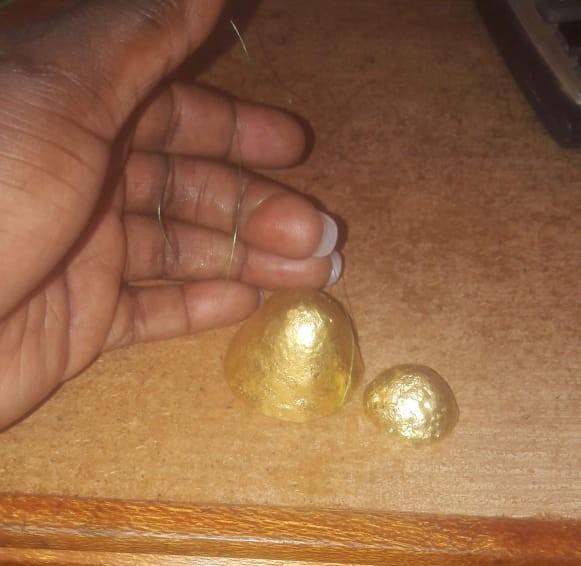
In Zimbabwe’s small-scale sector, workers routinely handle all of these substances without gloves, masks, and sometimes even training. While an immediate danger can be chemical burns, respiratory damage, neurological effects from cyanide inhalation, chronic exposure puts a limit on your lifespan, organ damage such as liver and kidney failure, and long-term neurological deterioration. These are not conditions that show up on a site inspection. They might show up in a clinic years later, perhaps never at all because the patient never made it there.
It is also worth noting that women in the industry often navigate the same physical dangers as men while also facing reduced visibility in safety planning, enforcement, and policy attention.

If artisanal mining does not prioritise its most valuable commodity, human life, what more of the environmental impact, the land degradation, the erosion, the chemicals that are never properly handled or disposed? Of course, the Environmental Management Authority EMA is always patrolling the hotspots and conducting raids to halt unregularized artisanal mining activities in undesignated areas, but in practice, they are not above receiving a small fee to look the other way, who is to know?
The majority of problems within the small-scale industry can be corrected with a regularisation of funding opportunities. The argument is straightforward: if local mine operators had access to affordable formal financing, they would not need to surrender 80% of their operations to predatory investors in order to access working capital. They would retain a greater share of returns and, in theory, a greater capacity to invest in the efficiency, safety and welfare of their operations.
Instead the ecosystem is a jungle filled with ownership wrangles, claim disputes and hostile takeovers usually resolved through violence and intimidation.
The most striking thing about all this isn’t the cost or the impact of mining on the community and environment but the way it has been normalised, it’s the matter-of-fact way that it’s carried out at extraordinary personal cost, with minimal protection, for a fraction of the returns their labour generates….
Leave a Reply