

Silent Cries Loud Echoes: Mad Hatters In Mining
There is a particular kind of person that Zimbabwean communities associate with small-scale mining. Loud, reckless, quick to anger and unreasonable. Seemingly uncaring about appearance, spending extravagantly one week and broke until their next windfall. Prone to drinking heavily, violent fights, erratic unpredictability that makes them difficult to live with and easy to dismiss.
They go by many colloquial names depending on the region, MaKorokoza, MaChangwe, MaShurugwi, MaGweja but have similar traits as if they are kinsmen of a fraternity that demands its acolytes live for the moment because tomorrow is never promised.
Rough. Unruly. Uncivilised.

But what if the story is more complicated than a moral failing? What if some of what communities read as recklessness is, in fact, the symptom of something happening to these men and women, quietly, invisibly, over weeks, months and years.
First of all consider the constant stress and hazards the artisanal miners have to navigate on a daily basis while living in makeshift shelter, the ones from more organised outfits have the comforts of camping gear.

Is it a surprise that they end up drinking excessively or consuming large quantities of stimulants and even drugs. Crystal Meth known on the streets as mutoriro is popular amongst the miners because it keeps you awake and energised among other things, and since they prefer working in the pits at night when the temperatures are cool and there is also less risk of being found by the security authorities, it’s a house on fire.
Zimbabwe is already in a crystal meth pandemic and now if you can imagine how ungovernable youth who take drugs more for recreational use become, what happens to those who run on it as fuel. The are claims that it helps you “know” where the gold belt can be found.
Artisanal gold mining is treated less like a scientific process and more of an arcane skill, you need an extra edge to strike gold, religion, spirituality, maybe even drugs. How else do you explain how someone with metal detectors and other geological survey will fail to find the gold but another will come through with nothing but a gut feeling and hit the jackpot on the exact same claim.
At its very least, venturing into mining needs psychological preparation for the emotional toll it will take, instead of filling the gap between expectation and reality with drugs and alcohol, and that’s before we factor in the risks that come with some of the chemicals they work with.
“Medical experts say studies in the mood and emotional altering effects of mercury could solve the conundrum of high incidents of violence among artisanal miners.” – The Herald Zimbabwe
Mercury is not a new threat to human health. Its neurological effects have been documented for over a century. The phrase “mad as a hatter” entered the English language as a direct reference to nineteenth-century hat-makers who were routinely poisoned by the mercury used to cure felt.
Artisanal and small-scale gold mining (ASGM) sector, uses mercury during amalgamation to bind gold extracted from ore. The resulting amalgam is then smelted, releasing mercury vapour. Research has found that inhalation is the single most dangerous route of exposure; the lungs absorb mercury vapour rapidly, and it crosses the blood-brain barrier with disturbing efficiency.
The neurological effects of that exposure are specific, progressive, and, at certain levels, irreversible. They include:
- Tremors and loss of motor coordination
- Memory loss and cognitive impairment
- Chronic insomnia
- Severe irritability and mood swings
- Hyperirritability escalating to extreme aggression and violent behaviour
- Depression and negative self-concept
- Heightened risk of suicide
Reflecting on the symptoms, you will see how it reads like a character list for a typical mukorokoza.

While mercury receives the most attention, it is not the only neurological threat. Cyanide used in the leaching process to extract gold from ore is acutely toxic and, at lower chronic doses, quietly destructive.
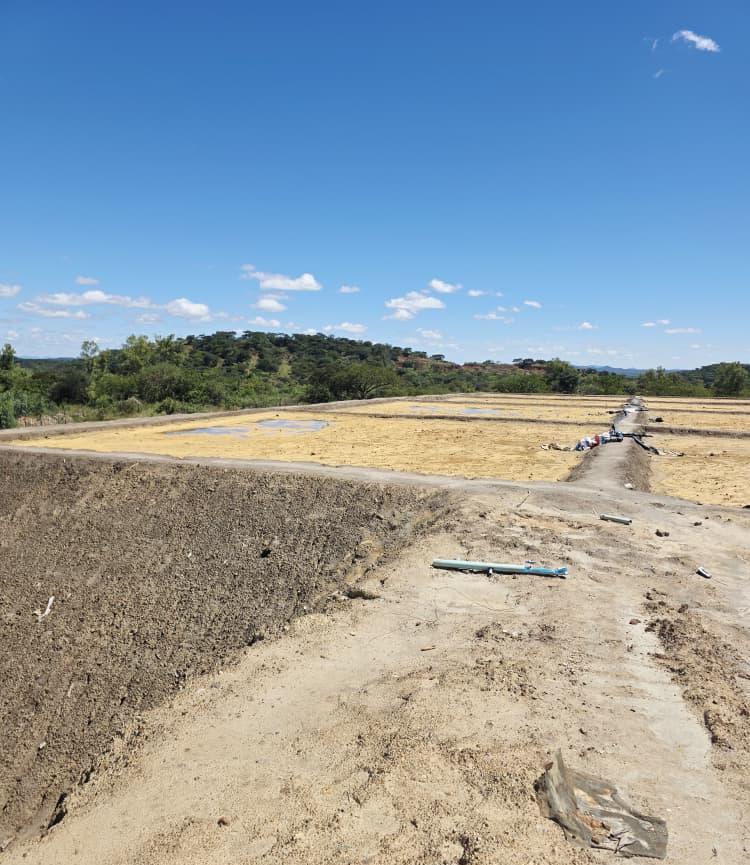
The crucial phrase in understanding chronic chemical exposure is this: “the after effects will show in the long run.” A source with direct knowledge of small-scale mining operations in Zimbabwe used those exact words to describe chemical handling without protection. They were not speaking clinically. But the clinical literature agrees with them precisely.
Here is the problem that sits at the heart of this story: the symptoms of chronic mercury and cyanide poisoning are almost impossible to distinguish, at a community level, from the effects of alcohol, drugs, stress, poverty, and just plain old poor character. And in Zimbabwe’s artisanal small-scale mining communities, all of those things are present.

What if the challenges communities experience with makorokoza as a social problem? The violence, unreliability, vulgarity and dangerous tendencies, may in significant part be a public health problem. A neurological injury that has never been clinically explored
The informal miner is blamed for behaviour that is, at least partially, a consequence of what their work has done to their nervous system. They are shamed, shunned and accused of all sorts of shenanigans. Without a framework to understand what is happening to them, they continue working in the same conditions that are slowly destroying their capacity to function.
The impact of these chemicals isn’t localised to the ones actively handling them, but spills over into the environment, wildlife, livestock, and underground water with horrifying implications for mining communities.

In Zimbabwe the are active drives to switch from using mercury alternatives such as is the Gravity Borax Method (GBM). A technique that uses sodium borate (borax) as a smelting flux rather than mercury amalgamation and by some measure has more superior results
Comparison Of Mercury Amalgamation to Gravity Borax Method
| Factor | Mercury Amalgamation | Gravity Borax Method (GBM) |
| Gold recovery | Standard yield | Up to 40% higher yield reported |
| Health risk | Severe — neurological, respiratory, renal damage | Minimal — borax is low toxicity |
| Processing time | Ore must dry (hours to days) | Wet milling; faster in practice |
| Cost | Mercury cost + health costs (uncounted) | Lower input costs overall |
| Legality | Increasingly restricted under Minamata Convention | Legal and encouraged |
| Environmental impact | Severe water and soil contamination | Benign |
Other alternatives exist beyond borax such as direct smelting and gravity concentration using mechanised shaking tables and spiral concentrators to separate gold without chemicals in certain ore types.
If the alternatives are better safer, higher-yielding, cheaper,and legal, the question becomes obvious: why is mercury still the default?
- limited documentation and awareness of alternatives
- inadequate resources to monitor and regulate chemical use
- unregulated and illegal mercury supply chains;
- poor implementation and low uptake of mercury-free alternative technologies.
That is not a portrait of a failed individual. It is a portrait of a failed system.
Leave a Reply