

Delulu Dreams in Borrowed In Words
There is something criminally ironic about writing an article on preserving indigenous languages in English. I am fully aware of this. I ask only that you extend me the small mercy of letting me maintain my delulu, the one where I tell myself it’s in English for the global audience’s benefit, and not at all because decades of colonial schooling remnants have made English the language in which I am most fluent in my own thoughts. We shall not examine that too closely.
Moving on.
Language, we are told, is a living thing. It stretches, it bends, it absorbs. New words pop up like mushrooms, especially in the streets and online. Those familiar with this blog have occasionally seen me highlight trending words and phrases. The consistent lesson from all of them is this: new words require no committee, no council of elders, no official gazette notice. They simply happen, born from necessity, mischief and the collective creativity of people who needed a word and decided to make one.
Which makes the condition of our indigenous languages all the more peculiar.
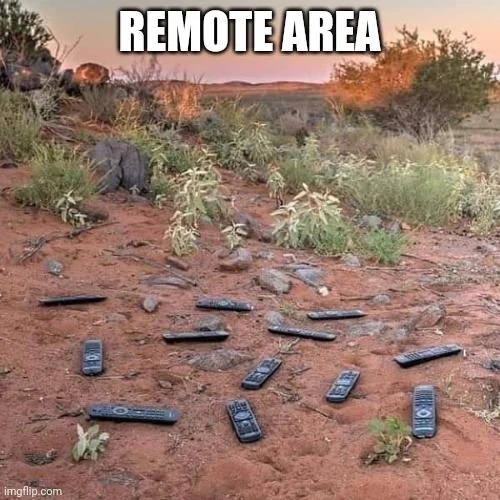
If language is supposed to evolve, then many of our indigenous languages seem to have been left buffering since colonial times. As if someone hit pause… and then left the resume button in a remote area.
Imperialism did not just arrive with flags and guns. It systematically suppressed indigenous knowledge systems, replacing them with its own, all under the generous branding of a “civilising mission.” This was not a side-effect it was the strategy.
And now here we are.
I can narrate an ancient folktale in ChiShona. But the moment the setting becomes modern, I start tripping over myself. Vocabulary runs thin. Suddenly, I’m forced to indigenise borrowed words..
“Computer”? becomes… kombiyuta.
“This blog”? Let’s not even try.
We often excuse this by saying, “Our ancestors didn’t have these things, so of course there are no words for them.” Fair enough. And yet, we already established how easy it is to invent words. So why do we act like we need permission slips signed by the ancestors before naming a laptop?
How did we get here?
If there were a handbook to colonialism, I would guess that the first chapter tells you how to eradicate culture and identity and replace it with yours and as a two-for-one bonus, you teach them your language instead of learning theirs…
I am a born-free. I grew up in a post-independent Zimbabwe.
When I started school in the 90s, English was not only the language of instruction, it was the only language we were allowed to use in class. If you used a Shona word in class (outside of a Shona lesson) you would be made to wear a badge of shame..

And like a game of linguistic tag, you would pass it on to the next person who was caught speaking Shona. The last person with the card would have to stay behind when school was out, doing duties such as sweeping the classroom or cleaning the windows.
I used to be quite proud that I never got the card, that I could converse the whole school day without “slipping up”. I excelled at almost all subjects, collecting perfect scores like Pokémon. Except Shona where I got a comfortable B. No one asked why it wasn’t an A. Not the teachers, not my parents, not even me, nobody was bothered so I wasn’t either.
The lesson was loud and clear.
Even now at my big age I see how people still equate one’s English fluency to intelligence and even critical thinking, or how on Social Media someone can get dragged mercilessly for typos and grammatical errors despite the brilliant points made.
So. What now?
There are people doing the work of reclamation, some eloquently, some eccentrically, all necessarily. There is no instruction manual for recovering an identity. You improvise. You argue. You disagree about methods but the destination is the same.
I did read something about the Government’s Ministry Of Education plan to make ingenious languages instruction medium for STEM subjects… Imagine breaking down The Theory Of Relativity in Shona or IsiNdebele… The idea is noble, but knowing our government, it would be so violently implemented that it would take the education system several steps back..
The honest answer, as with most things worth doing, is that it starts small, and it starts with the proverbial grassroots. Teach young minds to think and dream in their home languages, to create new meanings.

A language that cannot describe today will eventually be remembered only in yesterday.
WinterABC26 – My Language

Leave a Reply