
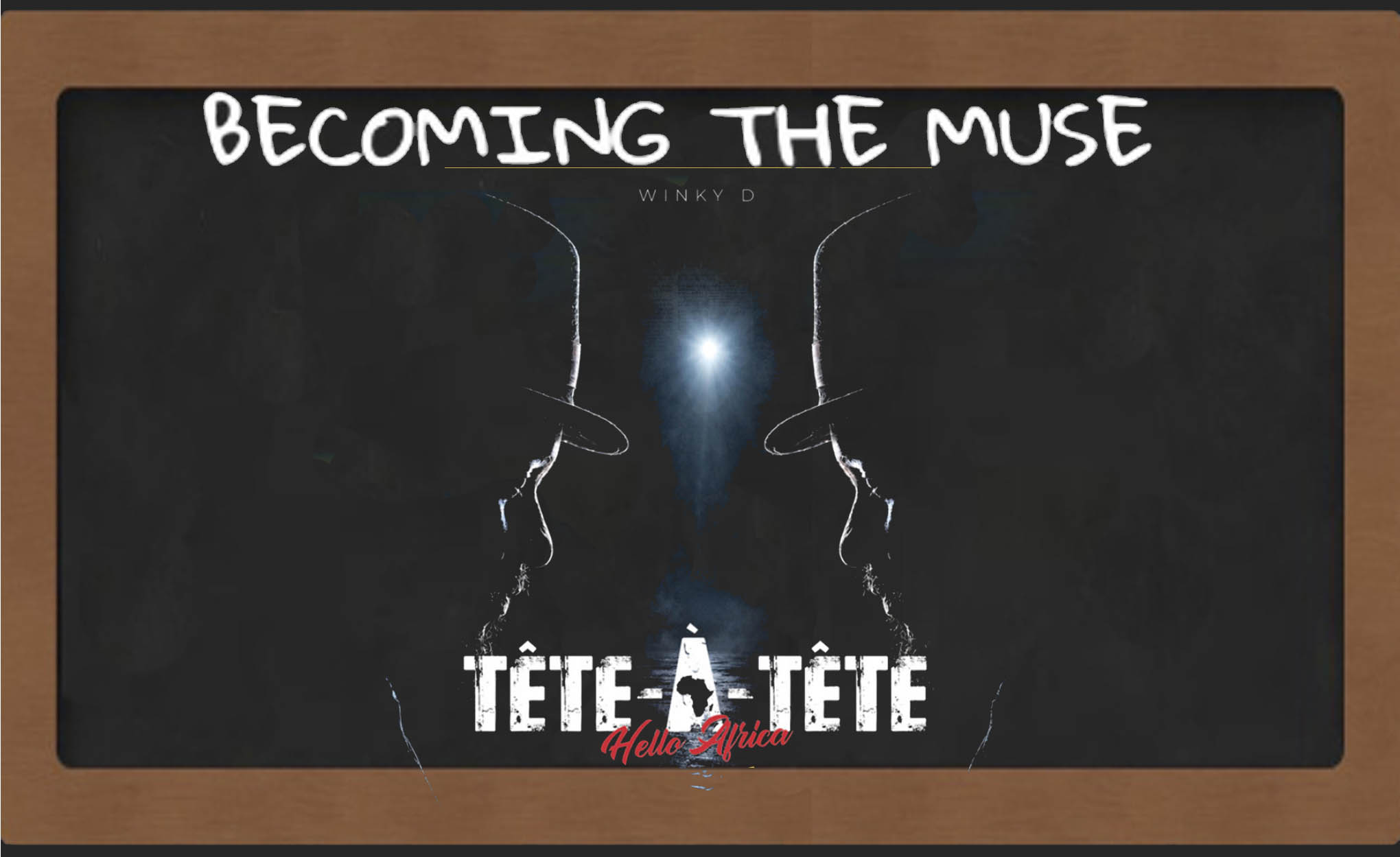
Winky D’s Tête à Tête
“A good dancer knows when to leave the stage,”
So begun an announcement that sounded suspiciously like a farewell speech, not just to end a concert but to hang up the microphone, the kind that would make headlines as the “END OF AN ERA”
Instead, the Ninja President Winky D, was reminding people that a better dancer brings new styles. And thus, he introduced a new album: Tête à Tête (Hello Africa).

Winky D, long celebrated for his socially conscious lyricism, dropped this one amid a storm of controversy and provocation, courtesy of a golden-robed outfit and horned headpiece that pushed the limits of creativity into the territory of was this entirely necessary.

Having grown up in an era when symbolism and occult conspiracy theories were at fever pitch in the entertainment industry, with the sort of moral panic that once had me cutting off certain artists for fear of losing my immortal soul. I’ll admit, the outfit gave me goosebumps.
Others saw it differently. Some argued that it was simply artistic expression, no more sinister than the spacesuit he had worn during the opening perfomance, landing on stage as if someone from outer space… Playing neatly into Winky D’s Extra- Terrestial aesthetic and a music catalogue that is so out of this world you need to have at least five O level passes to understand it.

Then came the internet, where nuance goes to die.
Some described the outfit as demonic. Others accused those defending the artist of being acolytes in some devilish cult. Meanwhile an eccentric traditionalist and Zimbabwean philosopher Joshua Maponga offered a decidedly different interpretation: that the imagery represented a Gombwe, a powerful traditional spirit medium, symbolising ancestral power and a sacred calling to guide other healers.
So, depending on whom you ask, Winky D was either channelling extraterrestrials, demons, ancestors or simply expressing a creative sense of style. The goat at the centre of the storm hasn’t made any direct official comment beyond dropping the new album that’s currently topping the local streaming charts.
Tête à Tête feels like the kind of album that arrives when an artist has matured, accumulated a loyal enough audience and earned the artistic freedom to make something simply because they want to.
This is not a party album. There is not a single dance track. It’s conscious reggae, stripped of the usual Zimdancehall flair, which will no doubt disappoint fans who hope to catch a groove and instead forced to develop a conscience.
The title itself, Tête à Tête, essentially a private conversation between two people feels appropriate, because this is an album that wants to talk, and it has quite a lot to say.
It opens with the inequality of the law, moves through blind patriotism, and settles into Pan-African reflections on freedom, leadership, and the silence that allows injustice to thrive.
It’s an album that points fingers at everyone: leaders and their institutions, citizens and their beliefs, each of us cast as architects of the state of things, the shackles of colonialism we’ve never fully shed, the flashy lifestyles we envy, the identities we have traded away and the beliefs we sometimes defend more passionately than we defend ourselves. It challenges us to listen, think, and speak up.
A good dancer may know when to leave the stage, but a better dancer knows when to change the music….
Tête à Tête
~B


Leave a Reply